
How to Set Up a Dog Poop Station in Your Backyard: A Step-by-Step Guide for Ottawa Dog Owners
How to Set Up a Dog Poop Station in Your Backyard: A Step-by-Step Ottawa Guide
Why Every Ottawa Dog Owner Wants a Backyard Poop Station
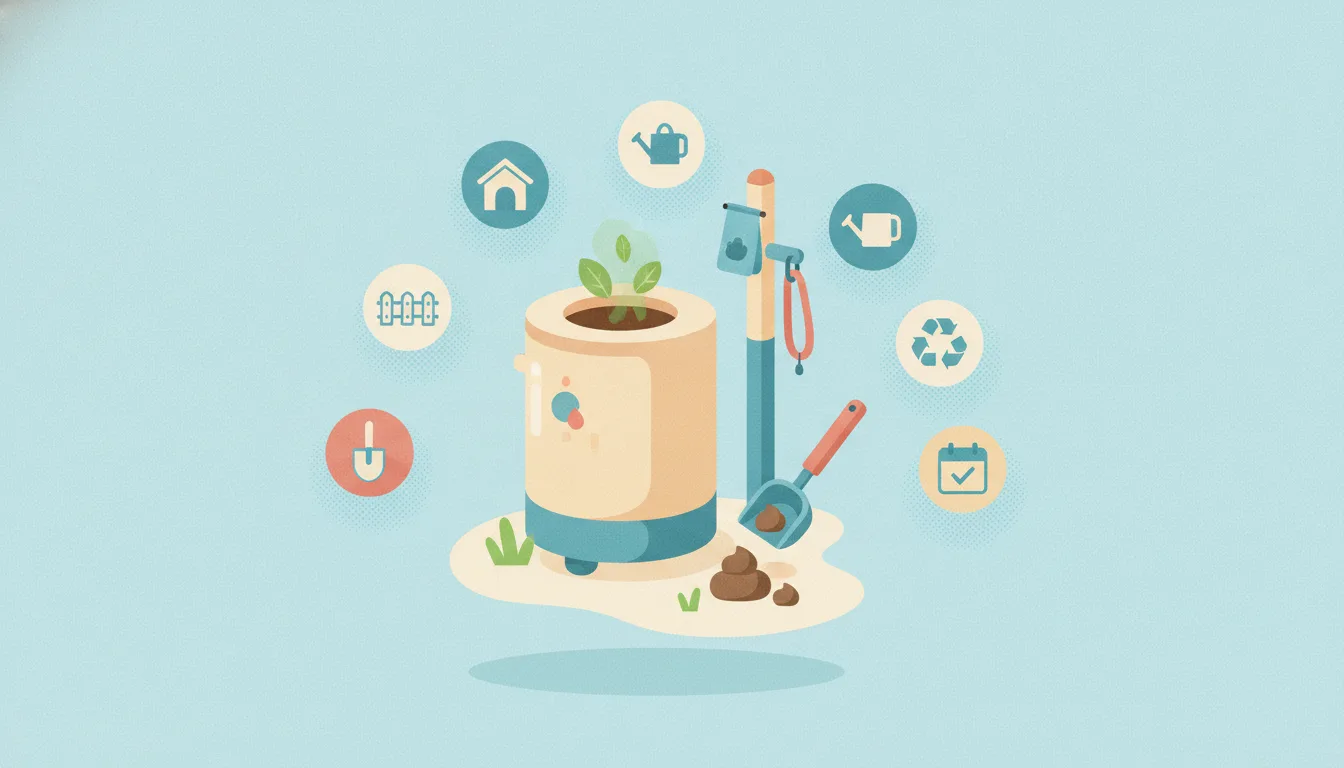
A backyard poop station is a dedicated spot for collecting, bagging, and containing your dog's waste — no more carrying dirty bags through the house. Instead of the post-poop shuffle (warm bag in hand, praying the knot holds), you drop it straight into a sealed, lidded container right where the action happens.
It's a hygiene win, too. Dog waste isn't just unsightly — it's a health hazard. The U.S. EPA's stormwater education notes that the waste from a relatively small number of dogs in a watershed can contribute enough bacteria to affect a swimming area (EPA). In Ottawa, where many yards drain toward the Rideau and Ottawa Rivers, prompt removal is a community-health issue — and a station makes immediate disposal second nature.
Step 1: Choose the Perfect Location
The ideal spot is within easy reach of your dog's primary bathroom zone — usually along a fence line or a corner — but away from patios, play sets, and vegetable gardens. Don't guess: watch your dog for a week and note their favourite patches. Place the station within 10–15 feet of that area, since a station by the back door does no good if your dog goes to the far fence.
Ottawa weather matters. Position it under an eave, beside a wind-blocking fence, or under some tree canopy to extend its life and keep bags from freezing. Avoid low spots that puddle in the spring melt.
Step 2: Gather Your Materials
You can build a functional station for under $30 from household items plus a quick hardware run, or buy a pre-made system for a cleaner, more durable look. The core pieces are a bag dispenser, a sealed lidded can, and an optional scoop.
| Feature | DIY (bucket & stake) | Pre-made system |
|---|---|---|
| Cost | $5–$15 (repurposed bucket + stake) | $40–$80 |
| Durability | Moderate (plastic can crack in deep cold) | High (heavy-duty, UV-resistant) |
| Looks | Low (a bucket on a stick) | High (tidy, mailbox-style) |
| Odour control | Low (lids can warp) | Good (tight seal, some with charcoal filter) |
| Maintenance | Higher (needs scrubbing) | Low (smooth interior, hoses out) |
Our take: on a budget, a repurposed 5-gallon bucket with a tight lid on a sturdy stake works perfectly. For looks and longevity, a purpose-built "dog waste station" (search that term online) is a one-time buy that survives Ottawa winters.
Where to shop in Ottawa: Global Pet Foods and PetSmart locations carry bag dispensers and small lidded cans; Canadian Tire and Rona have heavy-duty buckets, stakes, and fence brackets; Amazon.ca has pre-assembled stations; and Lee Valley Tools is great for weatherproof hooks and latches if you're building an enclosure.
Shopping checklist: a bag dispenser (large opening), a sealable odour-blocking lidded can (metal is best; a heavy-duty bucket works), sturdy bags (any sealed, leak-proof bag is fine — you don't need to pay extra for "compostable"), an optional scoop or trowel, a fun sign, and optional enzyme spray to neutralize odours.
Step 3: Assemble Your Station
Assembly is a 10-minute job needing just a screwdriver or drill:
- Pick a base. Use an existing wooden fence, or drive in a 4x4 post or a metal T-post (Canadian Tire) at your spot.
- Mount the dispenser. Screw it to the fence/post through the pre-drilled holes, or attach with outdoor-rated zip ties or a universal bracket on a stake.
- Position the can directly below the dispenser so it's one smooth motion: bag, scoop, tie, drop.
- Add a hook (a cup hook or carabiner) for your scoop.
- Decorate — a sign, reflective tape, or a solar light stake (Step 7).
Step 4: Stock and Maintain It (Winter Included)
A station is only as good as its upkeep: refill bags weekly, empty the can every 3–5 days (more in summer), and clean it monthly. Ottawa winters need a few extra moves:
- Prevent frozen bags: keep refills indoors and load only 10–15 at a time — pulling a frozen bag tears it.
- Insulate the can: wrap a plastic bucket in an old blanket or can cozy; use foam pipe insulation on metal cans.
- Clear the path: shovel a small radius around the station so snow doesn't pile against the lid.
- Stop lid-freeze: a light coat of silicone lubricant on the lid rim keeps bags from freezing to the plastic.
Maintenance rhythm: check bags daily; empty the can weekly (see the disposal step below); wash monthly with a pet-safe disinfectant or diluted vinegar; and inspect hardware for rust each spring and fall.
Step 5: Train Your Dog (and Your Family)
Training is about routine, not rocket science. Common mistakes to avoid: forcing change too fast (start the station near your dog's current spot, then nudge it ~6 inches a day if needed), moving the station around (dogs love consistency), forgetting to restock, and being the only one who uses it — show your partner and older kids the one-step routine: bag, tie, toss.
The training loop: after meals or walks, lead your dog to the area with a cue like "go potty"; reward the instant they finish within ~10 feet of the station; bag the waste in view and drop it in the can, then treat again. Repeat for 2–3 weeks — most dogs form the association within about 10 days. A clicker (click the moment they finish) speeds it up.
Step 6: Dispose of Waste Properly in Ottawa
Dog waste should never sit on the ground or go in a regular home compost pile. In Ottawa you have two easy, legal options — and the good news is the greener one is officially allowed.
The green bin (greenest). Since 2019, the City of Ottawa accepts dog waste in the green bin when it's in a sealed, leak-proof bag, up to 25% of the bin's volume, with any excess flushed (City of Ottawa). This diverts it from landfill — so empty your station's can into the green bin (bagged).
Regular garbage is also fine — securely bagged. On public property, failing to pick up is a by-law offence and fines apply; confirm current amounts via 3-1-1.
Other options, briefly: in-ground pet-waste digesters (like the "Doggy Dooley") use enzymes and water to break waste down into the soil — a niche choice that needs the right spot and warm weather. The City also permits flushing the waste itself (not the bag) under its Sewer Use By-law. Skip backyard hot-composting unless you're a dedicated composter with a dedicated bin, since home piles rarely get hot enough to kill pathogens.
Step 7: Level Up with Accessories (and Pro Help)
A few upgrades turn a basic station into a backyard command centre:
- Solar path light (~$15): stake it beside the station so you can see the dispenser on dark winter evenings.
- Motion-activated sprinkler ($30–$50): deters raccoons and skunks from investigating the can.
- A fun sign: "The Poop Deck," "Drop Zone," take your pick.
- A flat stepping stone in front for a clean, dry place to stand while bagging.
When to Bring in a Pro
Even the best station still needs a human. If winters wear you down or your schedule's packed, Scoop Dog can take it off your plate entirely — we scoop on a consistent weekly or bi-weekly schedule regardless of weather, keep your yard (and station) clean, and text a photo confirming the cleanup and a closed gate. We also offer dog waste stations as a service if you'd like one handled for you.
Frequently Asked Questions
How often should I empty the can?
Every 2–3 days in summer to beat flies and odour; every 5–7 days in winter (don't let it overflow — frozen waste is harder to remove).
Can I use regular grocery bags?
You can, but they're thin and tear easily. Sturdier poop bags mean less mess. Any sealed, leak-proof bag works for the green bin or garbage.
Do I need to clean the inside of the can?
Yes — monthly. Empty it, spray with a 50/50 vinegar-water solution (or pet-safe disinfectant), let it sit 10 minutes, and rinse. It prevents buildup and keeps things neutral-smelling.
What if my station freezes solid?
Bring a frozen dispenser inside to thaw overnight; for a stuck lid, pour a little hot (not boiling) water around the rim. Better yet, prevent it with an insulated can cozy and a lubricated lid rim.
Your Yard, Solved in 7 Steps
Setting up a backyard poop station is one of the simplest, most rewarding five-minute projects you'll do for your yard and your routine. It cuts odour, ends the bag-through-the-house shuffle, and keeps your lawn cleaner for the whole family.
Get a free quote from Scoop Dog or text/call 613-400-4040. New customers get $20 off the first month — no contracts, 100% satisfaction guarantee. 🐶
Sources
- U.S. EPA — Nonpoint Source Pollution (pet waste)
- City of Ottawa — Green Bin Program (pet waste rules)
- U.S. CDC — How Toxocariasis Spreads (roundworms & soil)