How to Train Your Dog to Poop in One Spot: A Step-by-Step Guide for Ottawa Owners
How to Train Your Dog to Poop in One Spot: A Step-by-Step Guide for Ottawa Owners
Why Train Your Dog to Poop in One Spot?
Every Ottawa dog owner knows the "poop patrol shuffle" — you let the pup out, grab a coffee, and come back to landmines scattered across the yard. One behind the shed. Two by the garden. One cheekily under the maple. Concentrating it all in one spot fixes several problems at once:
- Time: a 30-second scoop instead of a 5–10 minute hunt — 30–60 hours a year saved.
- Lawn: one contained area instead of twenty nitrogen burn spots across your grass.
- Health: less chance of stepping in it, and dog waste can carry roundworms and hookworms that survive in soil for years (CDC).
- Odour: one manageable spot instead of a whole-yard stink zone.
- Scooping: if you use a service, a predictable spot means faster, more thorough visits.
Step 1: Choose the Perfect Spot
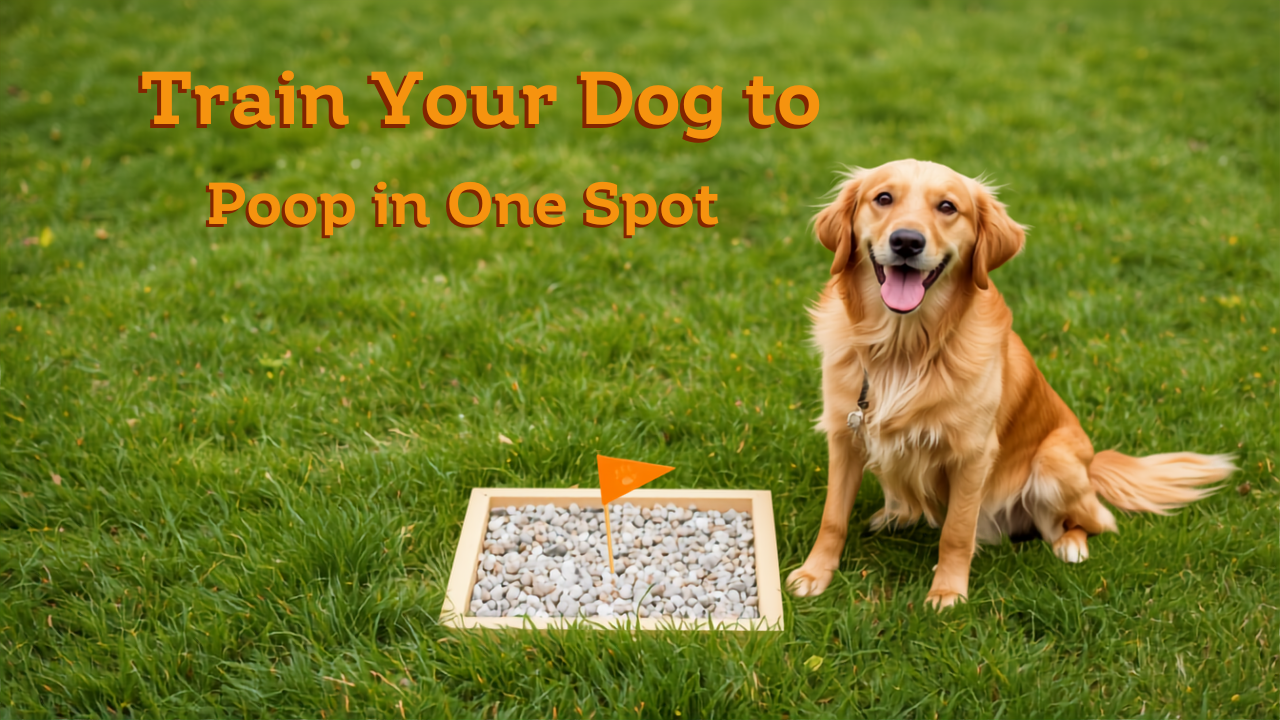
Your dog needs to feel safe and be able to find the spot again. Aim for a quiet, accessible, well-draining area — at least 4×4 feet — on gravel, mulch, or bare soil (easy to clean, won't kill your lawn), away from fence lines and foot traffic. If your dog already favours a corner, make that the official spot.
Ottawa-specific: pick somewhere you can easily shovel (avoid drift-prone areas), that won't turn to a mud-season swamp (pea gravel helps), and mark it with a tall flag or post so both of you can find it under deep snow. A solar path light helps for dark winter mornings. Cold weather also means your dog's bladder fills faster, so expect more frequent trips — an easy-access spot matters even more. A dedicated backyard poop station pairs perfectly with a designated spot.
Step 2: Establish a Consistent Routine
Dogs learn patterns faster than commands. Take them to the same spot at the same times and they'll start heading there on their own.
| Time | Action | Why |
|---|---|---|
| First thing in the morning | Straight to the spot | Bladder is fullest after sleep |
| After each meal | To the spot within 15–30 min | Digestion gets things moving |
| After naps / crate time | Direct to the spot | Prevents confusion accidents |
| Before bed | Final trip | Empty bladder for the night |
| Puppies: every 2–4 hrs | Quick trip | Tiny bladders |
Use a short cue ("Go potty," "Business," "Hurry") in the same tone every time — only at the spot, never while they sniff elsewhere. And stay until they go: this is where most people fail. Use a short leash, no distractions, no wandering off after squirrels. The moment they finish — celebrate.
Step 3: Use Positive Reinforcement Effectively
Rewards must land within 1–2 seconds of the poop to build the association. The classic mistake: your dog finishes, you fumble the treat bag, and the reward arrives 15 seconds later — now they've learned "poop, then walk away for a treat." Have the treat ready in your hand before they start circling, and deliver it the instant they finish.
Use high-value treats reserved only for potty training — freeze-dried liver, small cheese cubes, or boiled chicken beat plain kibble every time. Avoid rewarding too early (for sniffing or just approaching), or your dog learns to sniff and stroll without going. Fade treats gradually, not abruptly.
Step 4: Manage Accidents Without Punishment
Punishment backfires — veterinary and positive-reinforcement training guidance consistently finds it causes fear and anxiety and can worsen behaviour. Yell at a dog for pooping inside and they don't learn "don't poop inside"; they learn "pooping makes my human angry, so I'll hide to do it" — which just makes accidents harder to find.
Never rub their nose in it, yell, hit, or scold after the fact (they won't connect it). Instead: if you catch them mid-act, a neutral "Oops!" and lead them to the spot; if they finish there, reward. Clean accidents with an enzymatic cleaner (it breaks down the odour compounds so they're not drawn back), and let it dwell 10–30 minutes. If accidents keep happening, supervise more closely and watch for the tells: circling, sniffing the floor, whining at the door, pacing.
Step 5: Reinforce with Scent Markers
A dog's nose is thousands of times more sensitive than ours, and they return to where they've gone before. The "poop trophy" method: after scooping, leave one small piece behind as a "this is the place" sign. Commercial attractant sprays exist, but their evidence is mixed — your dog's own scent is the most reliable cue, so don't rely on sprays alone.
After rain or snow, the scent trail washes away — that's when dogs start going elsewhere. Take them to the spot first thing, refresh the marker, and in winter clear the snow to expose the scent underneath. Once your dog uses the spot 90%+ of the time, stop leaving waste behind and fade the markers out — the goal is a clean, scoopable yard.
Step 6: Troubleshoot Stubborn Dogs
Rule out medical issues first. If a trained dog suddenly goes everywhere, see your vet — IBD, parasites (worms, giardia), food allergies, anal-gland issues, or cognitive decline in seniors can all break potty training. Those are medical problems, not stubbornness.
| Problem | Likely cause | Solution |
|---|---|---|
| Poops right after leaving the spot | Not waiting long enough | Stay 5+ min, use a leash |
| Uses one spot — the wrong one | Better scent cues there | Add scent markers to the correct spot |
| Goes on walks but not in the yard | Yard feels boring or scary | Make the spot more appealing |
| Worked 2 weeks, then stopped | Routine or rewards lapsed | Back to basics for 3–5 days |
If 4–6 weeks of consistency brings zero improvement, bring in a certified dog trainer (look for CCPDT or IAABC credentials). For suspected medical-behavioural causes, a veterinary behaviourist can help — though these specialists are relatively few, so access can be limited and costs higher.
Step 7: Maintain the Habit for Life
Training doesn't end when the habit sticks — Ottawa's seasons need adjustments. Winter: clear a path and keep the spot shovelled so your dog isn't postholing through snow, and expect more frequent trips. Spring: lay pea gravel or mulch to beat mud season. Summer: keep it clean (flies) and shaded — dogs avoid a spot baking in 35°C sun. Fall: rake leaves off so they can find it.
Once your dog is 95%+ reliable, fade to random treats and lean on praise, with occasional "jackpot" rewards. And keep the area clean — a dirty spot drives dogs to seek a fresh one, so scoop at least every other day. (Using a service? We handle that for you.)
Watch: Training the One-Spot Habit
A short trainer's walkthrough of the same method — handy to see it in action.
Watch: How to train your dog to poop in one spot Opens current how-to videos on YouTube ▸Frequently Asked Questions
How long does it take to train a dog to poop in one spot?
Most dogs pick it up within 1–2 weeks of consistent training. Older dogs used to free-ranging the yard may take 4–6 weeks to transition; puppies trained from day one often master it in 10–14 days.
Can I train an adult dog to poop in one spot?
Yes. Adults have better bladder control than puppies, which actually helps — the main task is replacing an existing habit, which just takes consistency and patience.
What if my dog refuses to use the designated spot?
Check that the spot isn't too small, too public, or uncomfortable, and try a scent marker. If they still refuse, rule out a medical issue — constipation or pain can make a dog avoid a location.
Should I use potty pads for outdoor training?
No — pads teach dogs to go on soft, absorbent surfaces, which confuses outdoor gravel/grass training. Use pads only for indoor situations, not for transitioning to an outdoor spot.
Start Today
Training your dog to poop in one spot isn't rocket science — it's patience, consistency, and understanding how your dog's brain works. Pick your spot and take your dog there right now. Worst case, they don't go. Best case? You never play "find the poop" again.
Get a free quote from Scoop Dog or text/call 613-400-4040. New customers get $20 off the first month — no contracts, 100% satisfaction guarantee. 🐶
Sources
- U.S. CDC — How Toxocariasis Spreads (roundworms & soil)